
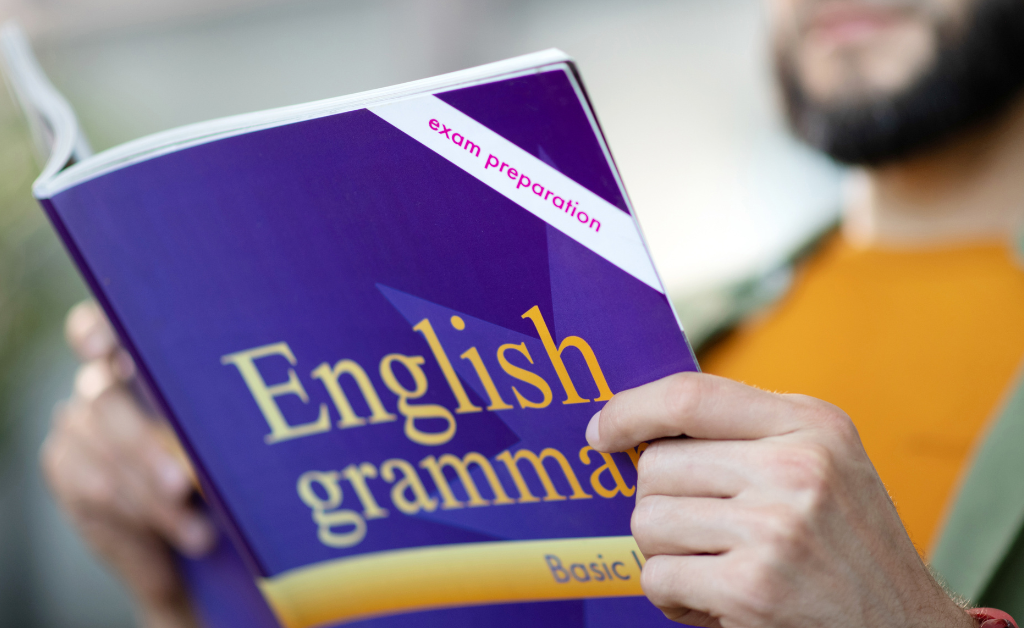
Are you struggling with English grammar? Even advanced learners or students preparing for IELTS/ PTE & English for all Competitive Exams (SSC, BANK, UPSC, NDA, CDS, AFCAT, JUDICIARY, CLAT, CTET, CUET. D.P. etc.) often make simple mistakes that can change the meaning of a sentence. Whether you are writing emails, preparing for exams, or communicating professionally, avoiding grammar errors is crucial. In this blog, we will explore the top 10 common English grammar mistakes and give you practical tips to correct them.
1. Confusing “Their,” “There,” and “They’re”
Many learners mix up these words because they sound similar.
- Their – shows possession: Their house is beautiful.
- There – refers to a place: The keys are over there.
- They’re – contraction of they are: They’re going to the park.
Tip to avoid: Read your sentence aloud to see if “they are” fits. If yes, use “they’re.”
2. Using “Its” vs. “It’s” Incorrectly
- Its – possessive form: The cat licked its paw.
- It’s – contraction of it is: It’s raining outside.
Tip to avoid: Try replacing “it’s” with “it is.” If it works, then “it’s” is correct.
3. Misplacing Apostrophes
Apostrophes show possession or contraction. Common mistakes:
- Wrong: The dogs bone is missing.
- Correct: The dog’s bone is missing.
Tip to avoid: Use an apostrophe for possession (John’s book) or contractions (don’t, it’s), not for plurals.
4. Incorrect Subject-Verb Agreement
The verb must match the subject in number.
- Wrong: She go to school every day.
- Correct: She goes to school every day.
Tip to avoid: Identify the subject and ask yourself: singular or plural? Then choose the correct verb form.
5. Confusing “Then” and “Than”
- Then – relates to time: We went to the park, then had lunch.
- Than – used for comparison: She is taller than her brother.
Tip to avoid: Remember, “than” is only for comparisons.
6. Using Double Negatives
Double negatives create confusion and are grammatically incorrect.
- Wrong: I don’t need no help.
- Correct: I don’t need any help.
Tip to avoid: Use only one negative word in a sentence.
7. Wrong Use of “A” and “An”
- A – used before consonant sounds: a book, a university
- An – used before vowel sounds: an apple, an hour
Tip to avoid: Focus on sound, not spelling.
8. Mixing Up “Who” and “Whom”
- Who – subject of a verb: Who is coming?
- Whom – object of a verb or preposition: To whom should I address the letter?
Tip to avoid: If you can replace it with “he/she,” use who. If you can replace it with “him/her,” use whom.
9. Confusing “Fewer” and “Less”
- Fewer – for countable nouns: Fewer people attended the meeting.
- Less – for uncountable nouns: I have less water in my bottle.
Tip to avoid: Count the noun. If you can count it, use fewer; if not, use less.
10. Overusing Commas or Misplacing Them
Commas can change the meaning of a sentence.
- Wrong: Let’s eat grandma!
- Correct: Let’s eat, grandma!
Tip to avoid: Use commas to separate ideas, clauses, or items in a list. Read aloud; if there’s a natural pause, a comma may be needed.
Final Thoughts
English grammar mistakes are common, but with a little attention, they can be avoided. Practice regularly, proofread your writing, and use tools like Grammarly to catch errors. Mastering grammar will improve your communication, boost confidence, and make you sound professional in every setting.
Join Now, Feel The Difference!
📍 Location: Thapar House, Gautam Nagar, Green Park Metro Station Gate No.2, Behind Axis Bank, Delhi-110049
📞 Contact Us: 91+9810572736
🌐 Website: https://www.launchpadenglish.com/
📩 Enroll Today & Start Speaking English Fluently, Clearly & Confidently!